BLOG

How Paper Is Made: From Fibre to Finished Sheet

Nov 16, 2026

Paper is something we use every day, but the process behind it is anything but simple. From the fibres that give a sheet its strength and character to the finishing techniques that determine how it feels and performs, every stage of papermaking plays a role in the final result.

Understanding that journey can also help designers, printers, and brands make more informed paper choices.

It Starts with Fibre

Before a sheet of paper takes shape, its fibres need to be prepared.

Paper can begin with fibre extracted from wood, recycled paper, or alternative plants. These fibres are processed through pulping and refining, then blended with water and papermaking additives to create a fluid mixture called slurry. 

The type of fibre matters. Hardwood fibres tend to be shorter, contributing to a smoother surface and detailed print reproduction, while longer softwood fibres add strength and flexibility. Cotton, recycled fibre and alternatives such as hemp, bamboo and miscanthus can bring their own performance, tactile and sustainability characteristics.

From Slurry to Sheet

The slurry enters the headbox of the papermaking machine, where it is distributed evenly onto a fast-moving mesh belt called the Fourdrinier wire. 

As water drains away, the fibres begin to settle, interlock and align. This stage is known as formation, and it is where the sheet starts developing its structure and grain direction. Formation can ultimately influence everything from print performance and surface consistency to how well a finished piece folds.  

Pressing and Creating Texture

At this point, the newly formed paper is still fragile and contains a significant amount of water. It moves through the press section, where rollers and felts remove more moisture while consolidating the fibre network and increasing the sheet’s strength. 

This is also where some of paper’s distinctive character can begin to emerge. If a textured finish is required, a dandy roll can be used while the sheet is still wet to subtly rearrange its fibres. Laid lines, woven effects and watermarks can all be created this way — making the texture part of the paper itself rather than something simply applied to its surface.  

Drying and Finishing

Next comes drying. The sheet travels over steam-heated cylinders, removing the remaining moisture and stabilizing the bonds between its fibres. 

Depending on the desired finish, the paper may then pass through a calender stack, where controlled pressure adjusts its smoothness, thickness and surface gloss. Lighter calendering can preserve more of the paper’s tactile quality, while greater pressure creates a smoother, more polished surface suited to detailed print work.  

From the Mill to You

The finished paper is wound into large parent rolls before being converted into usable sizes through cutting or sheeting. The paper is inspected, packaged and prepared to leave the mill for distribution — ready to become everything from books and brochures to packaging, direct mail and brand experiences.  

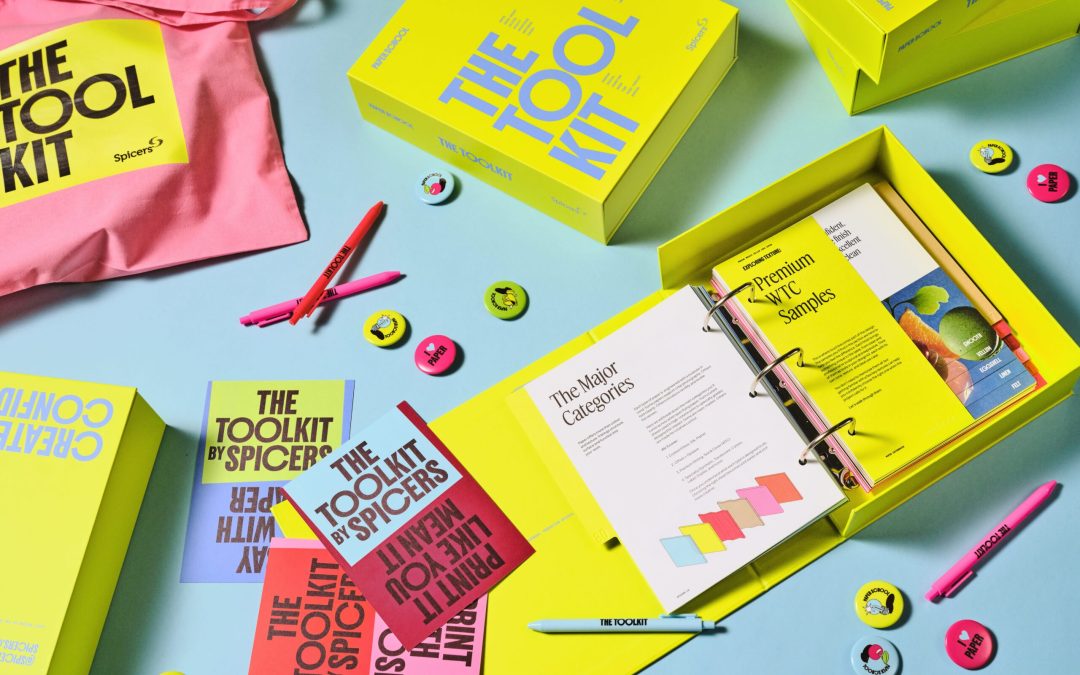
What looks like a simple sheet is really the result of fibre selection, water, pressure, heat and precision working together. And those decisions made during manufacturing ultimately influence how paper looks, feels, folds, prints and performs— the core idea introduced in Section Four of the Paper School Toolkit.  

See the Entire Process
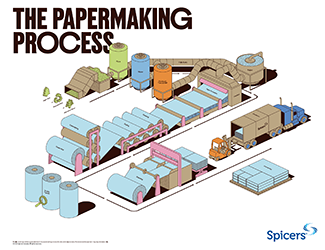
Want to see how fibre becomes a finished sheet?
Download our How Paper Is Made poster or a visual guide to the papermaking process — from fibre preparation and formation through pressing, drying, finishing and converting.

Watch how paper is made at Mohawk

Recent News

Important Notice: Protecting Against Fraudulent Activity

Important Notice: Protecting Against Fraudulent Activity

Dear Valued Customer, As part of our ongoing commitment to transparency and security, we want to alert you to recent bad actor attempts to impersonate legitimate businesses—including ours—in order to mislead customers into making payments to fraudulent accounts. These...

Spicers Canada Expands HP Partnership to Include Full Latex Portfolio

Spicers Canada Expands HP Partnership to Include Full Latex Portfolio

Vaughan, ON – August 13, 2025 – Spicers Canada, a leading distributor of paper, packaging, graphic systems and solutions, announces the expansion of its relationship with HP by extending its capabilities beyond HP Stitch dye sublimation systems to include the full HP...